


My entire life I’ve been surrounded by handmade objects. Small table sized statues. Handcrafted baskets. Woven rugs and outerwear. And quilts. Quilts adorned our beds and our sofas. We huddled under quilts during heavy storms for comfort, told stories as they draped over our laps during long weekend afternoons, slept under them while napping and during restful nights. Many of the quilts in my life were designed and crafted and gifted by our families’ elder matriarchs, women by the names of Big Momma and Grandma Fannie.
Our elders, and many after and beyond them, taught me how to stitch together symbols and stories and materials into something that could last generations and have meaning across space and time. My own quilt that I keep from my Big Momma has comforted me across the country as I traveled for school and work over the years. When I left to study and work in Britain, she stayed folded back in the states, in my hometown of Bloomington Ind, awaiting my return. And when I came back to retrieve her, we picked up where we left off and continued our journey to my current home in Berea, KY.
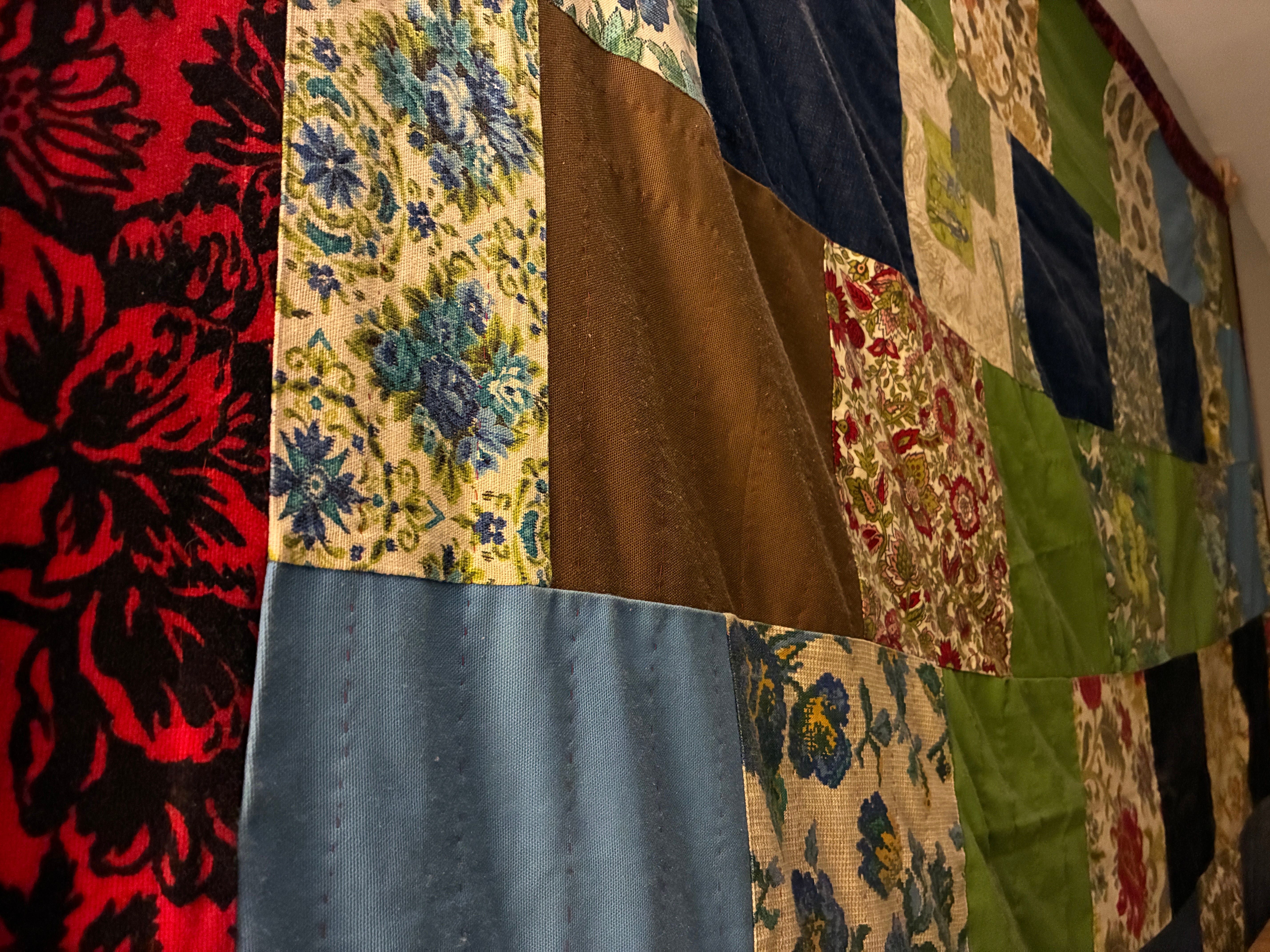
What these family quilts taught me was two-fold. First, that anything can be made or done with very little but a lot of focus and determination. Making a quilt is not a small feat. It involves vision, technique, skill, and creativity. There are many beautiful quilts made with the best materials, and there are many, like my Big Momma’s, that are made from fabric she had available to her: table cloths, curtains, old garments. It’s made using mostly hand stitching and piecing. And, it has lasted for decades, being passed to me as its third-generation owner. My second lesson is that, while life is fleeting, the objects we make and carry and share can last well beyond our own lifetimes. These quilts carry the historical artifact and memory of my family, but also of our American culture and of our lifetimes on earth.
Quilts symbolize and embody unbounded connection with others, honoring the ways in which we love and show up for ourselves and for our communities. My own quilts and quilted objects add to this symbolism and contribute a study of American cultures through visual inquiry and expression. What I’ve learned about memory from quilts that have outlasted my ancestors is that we all leave an impression on earth, and that impression can and will continue to have a life of its own. The quilt is a living archive, not only an everyday household object with deep value, but a threshold, a portal for seeing and remembering our ancestors, ourselves, and our future descendants in relationship with each other. Often, I revolve around these thoughts: How many stories are stitched within these quilts? How many memories and moments do they hold?
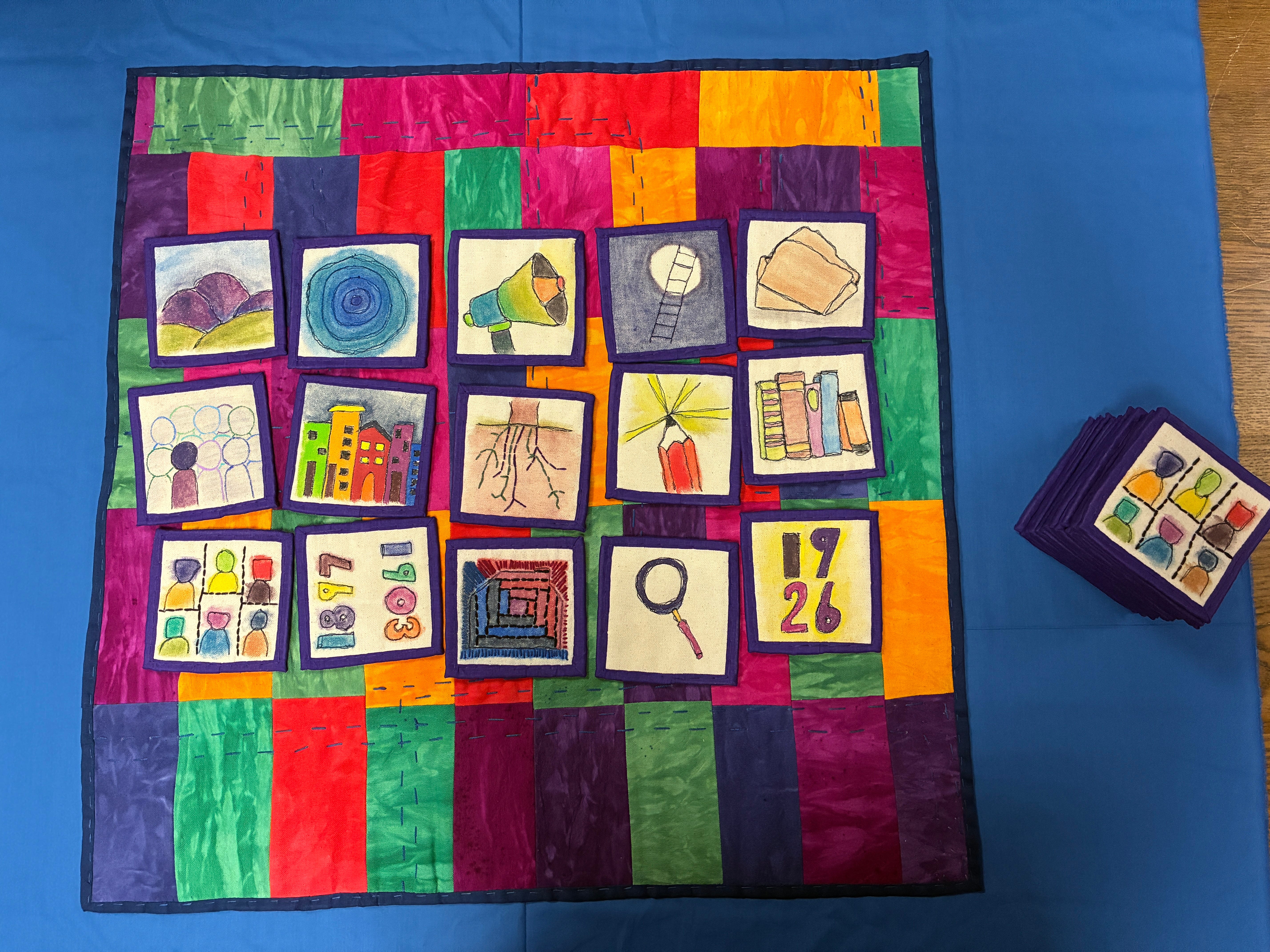
The epiphany came when I was encouraged to connect my creative practice with my research practice and apply for an artist’s grant, as an artist. I wrestled with the idea that “I’m not an artist.” But through the application experience, the subsequent awarding, and the process of making and eventually sharing my initial memory game quilts, I became the kind of artist I didn’t know was deep within. Now, I could see the connection between knowledge, art practice, and connection. Summer 2025, when I embarked on those first sets of artworks, the memory game quilts, I found my body embracing a new kind of peace and acceptance I hadn’t felt before. My attention was fully focused on experiencing the unfolding of the quilted games and ideas flowed alongside my future aspirations to show this work widely. My breath softened, and I settled into the rhythms and vibrations of being a producing artist. I was engaged in the microstories from the Berea College Archives and enthralled by the stories that were emerging as I constructed, stitched, illustrated, and painted fibers into symbols of memory.
In these moments, I felt the kindred understanding of my own familial ancestors but also was awakened to idea that the historical figures I was artistically and visually dialoguing with were also my ancestors, my cultural ancestors. Too often we are taught the abridged version of the abridged version of Black America, but here I was deep diving into three archival legacies and experiencing the nuanced yet vast lives of Black Americans hundreds of years before my parents would ever utter a welcome greeting to each other. The quilts I’ve created, the memory games, game boards, art quilts, and so on, revealed something I hadn’t uncovered until this project began: that we are in a constant and ever-evolving relationship with our past, present, and futures. The things we do, say, write, make now are as much visions into our future potential as they are expressions of our present-day experiences and insights into the pasts that have crafted and shaped us.
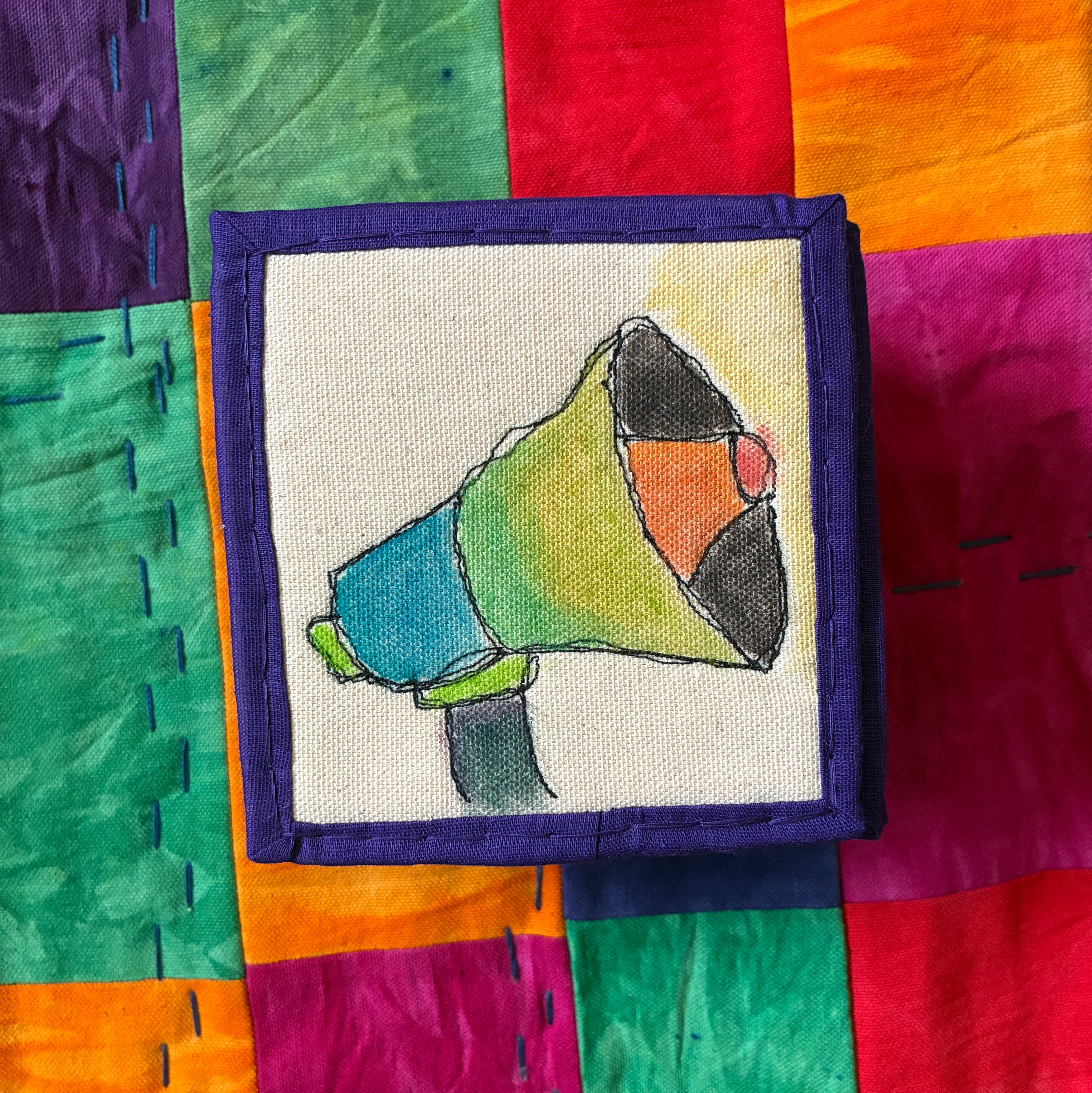
This work, thus far, has culminated in my art series Onyx Patchworks, which pieces together my archival research, playful learning approaches, and practices in cultural memory and visual storytelling. In Onyx Patchworks, these handcrafted artifacts also carry my ancestors’ lineages and traditions alongside the histories and microstories of Black Americans who influence and shape us. This creative memory work continues to teach me how to reframe what learning can be and how we share and participate in both historical and contemporary cultural memory.
My hope, as you encounter this series in the exhibition or by visiting the archive or through this zine, is that you’re able to also envision history as a reflection of today. I want you to feel and see everyday life in these stories. And I hope that you pause to reflect and marvel, to slow down for a moment in time, and to remember the shared histories that draw us together in America and beyond. This series is about remembering Black experiences as part of American History, the way Dr. Carter G. Woodson meant it when he established what we know as Black History Month in 1926. It’s about lively and diverse learning, like in the classrooms Julia Britton Hooks built and taught in as one of the first Black teachers in the South in the late 1800s. It’s about community resource sharing, just as Henry Allen Laine did through his Chautauquas for Black farmers across Madison County, KY in the early 1900s. This series is about finding ourselves and each other within the archives, and it is my invitation to you to share your memories and stories through creative expression.
While my physical quilted memory games are now held within the Berea College Archives and my art quilts are on display in the exhibition, this exhibition zine serves as the digital holding space for the stories and reflections adjoining and extending beyond the physical work. I want this zine to be an accessible and expanded pathway to my quilted artifacts and their extended stories in words and imagery. The articles within are meant to be reflective and thought-provoking in their long-form style, as the zine unfolds alongside the exhibition.
Throughout the exhibition period, meet me back here as I produce this exhibition zine as a live catalogue to coincide with my Onyx Patchworks solo exhibition at the Hutchins Library, Berea College from Jan 29 - Feb 26, 2026. This is my invitation to you to peer, and bravely step, through this threshold with me.
If this article resonated, you can subscribe to follow the full six‑week Onyx Patchworks exhibition zine.
Feel free to share this with educators, librarians, artists, memory workers, and anyone who learns through story, craft, and history.
I love the tactile-meets- ethereal nature of your work. This piece illuminates the deep, curious, bold person I have been lucky to be friends with for 2 decades! Excited to be on this journey with you from afar! ♥️✨🌈